
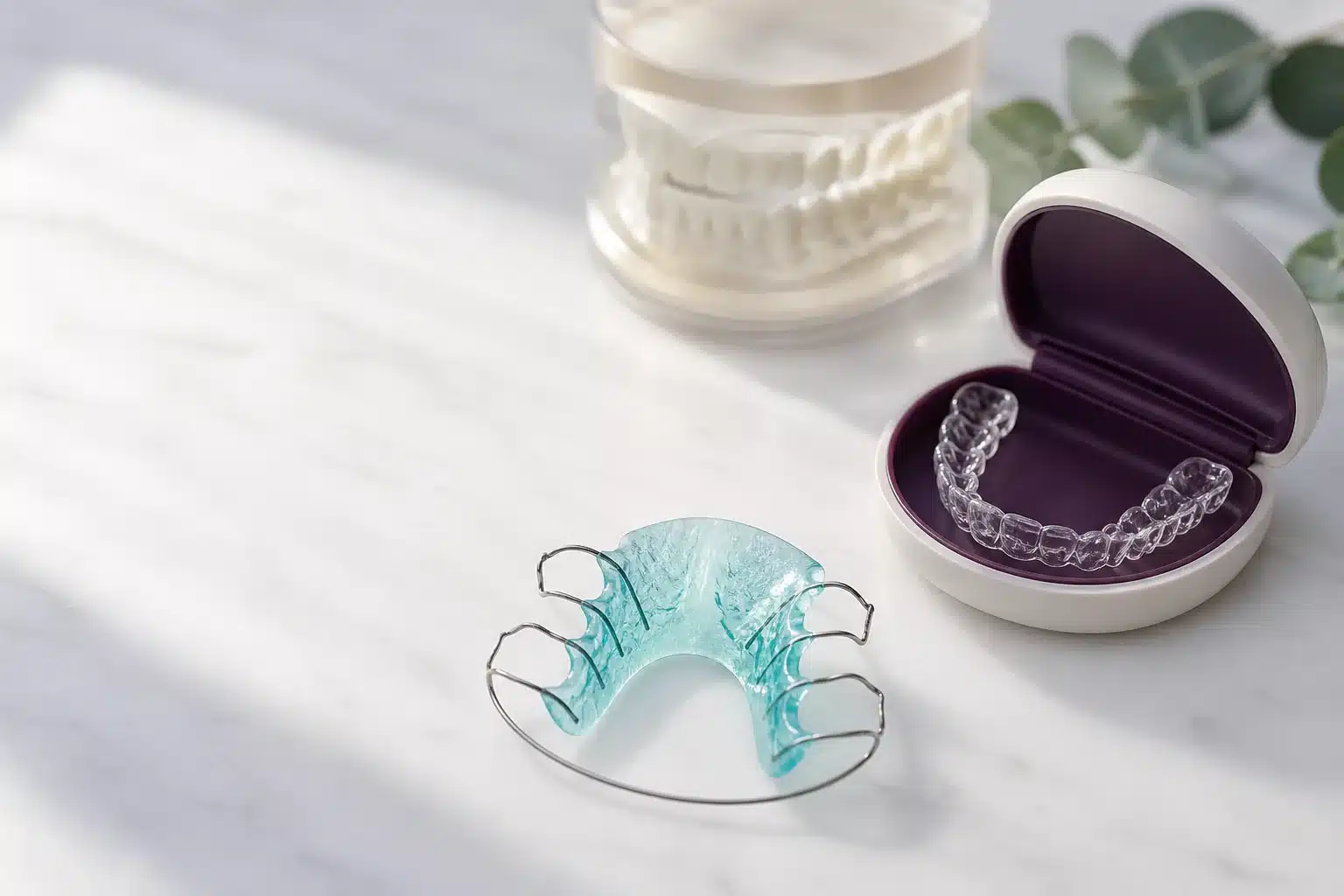
Finishing active orthodontic treatment is a milestone, but keeping the result requires a retainer after braces. Teeth can continue to shift as the bone and soft tissues adapt, and natural changes continue throughout life. Retention is therefore part of treatment, not an optional extra.
Why you need a retainer after braces
Braces and aligners guide teeth into planned positions. After active movement, the tissues supporting the teeth need time to reorganise. Without retention, teeth may drift toward previous positions. The American Association of Orthodontists explains that retainers help minimise this natural relapse and may be required in some form for life. See the AAO’s retainer guide for a useful overview.
Which retainer is best after braces?
There is no universal winner. A fixed retainer can be useful where continuous support is important. A removable retainer makes cleaning easier but only works when worn. Some patients use a combination. Your orthodontist selects the option that suits your original problem, result, hygiene and lifestyle.
9 practical rules for wearing a retainer after braces
- Follow your personal wear schedule. Do not reduce wear because the retainer feels comfortable.
- Use the case every time. A retainer wrapped in a tissue is easily lost or discarded.
- Keep it away from heat. Hot water, a dishwasher or a hot car can warp plastic retainers.
- Clean it daily. Use cool or lukewarm water and the method recommended for your appliance.
- Never force a poor fit. A retainer that suddenly feels tight may signal movement or distortion.
- Check fixed wires. Contact the practice if a bonded retainer feels loose or sharp.
- Bring it to reviews. Your orthodontist can inspect the fit and condition.
- Replace it when necessary. Cracks, warping, persistent odour or loss of fit should be assessed.
- Keep wearing it long term. Teeth naturally change throughout life, even after an excellent result.
How to clean a retainer safely
Rinse a removable retainer when it comes out of your mouth. Gently clean it with a soft brush and the product recommended by your orthodontist, then store it in a ventilated case. Avoid bleach, alcohol-containing cleaners and hot water unless your clinician specifically advises otherwise. The AAO’s retainer cleaning guidance recommends contacting your orthodontist if odour, discoloration, sharpness or poor fit persists.
What if your retainer feels tight?
Mild pressure can occur when a removable retainer has not been worn as prescribed, but pain or a retainer that will not seat fully should not be ignored. Do not bite it forcefully into place or try to adjust a wire yourself. Contact the practice promptly. Earlier advice is usually easier than waiting for more movement.
Frequently asked questions
How long must I wear a retainer after braces?
The daily schedule changes over time and differs between patients. Many people need ongoing night-time wear after the initial retention phase. Follow the written plan from your orthodontist.
Can I eat with my removable retainer?
Usually, removable retainers come out for meals. Follow the instructions for your specific appliance and keep it in its case while eating.
What happens if I lose my retainer?
Contact your orthodontist quickly. Teeth can move, and a timely replacement may help protect the result.
Does a fixed retainer mean I do not need a removable one?
Not necessarily. A bonded wire supports only the teeth to which it is attached. Your orthodontist may prescribe both.
Learn more about adult orthodontic treatment and protecting orthodontic results.
Your retainer after braces care check
Keep your retainer after braces in its case whenever it is not in your mouth, and bring it to review visits. If your retainer after braces becomes cracked, distorted, loose or difficult to seat, contact the practice before attempting to adjust it yourself.
Protect the smile you worked for
If your retainer is lost, damaged, loose or no longer fits, contact the practice before more movement occurs.
Clinical note: This article is general education. Retainer type and wear schedule must be prescribed for your individual result.

