
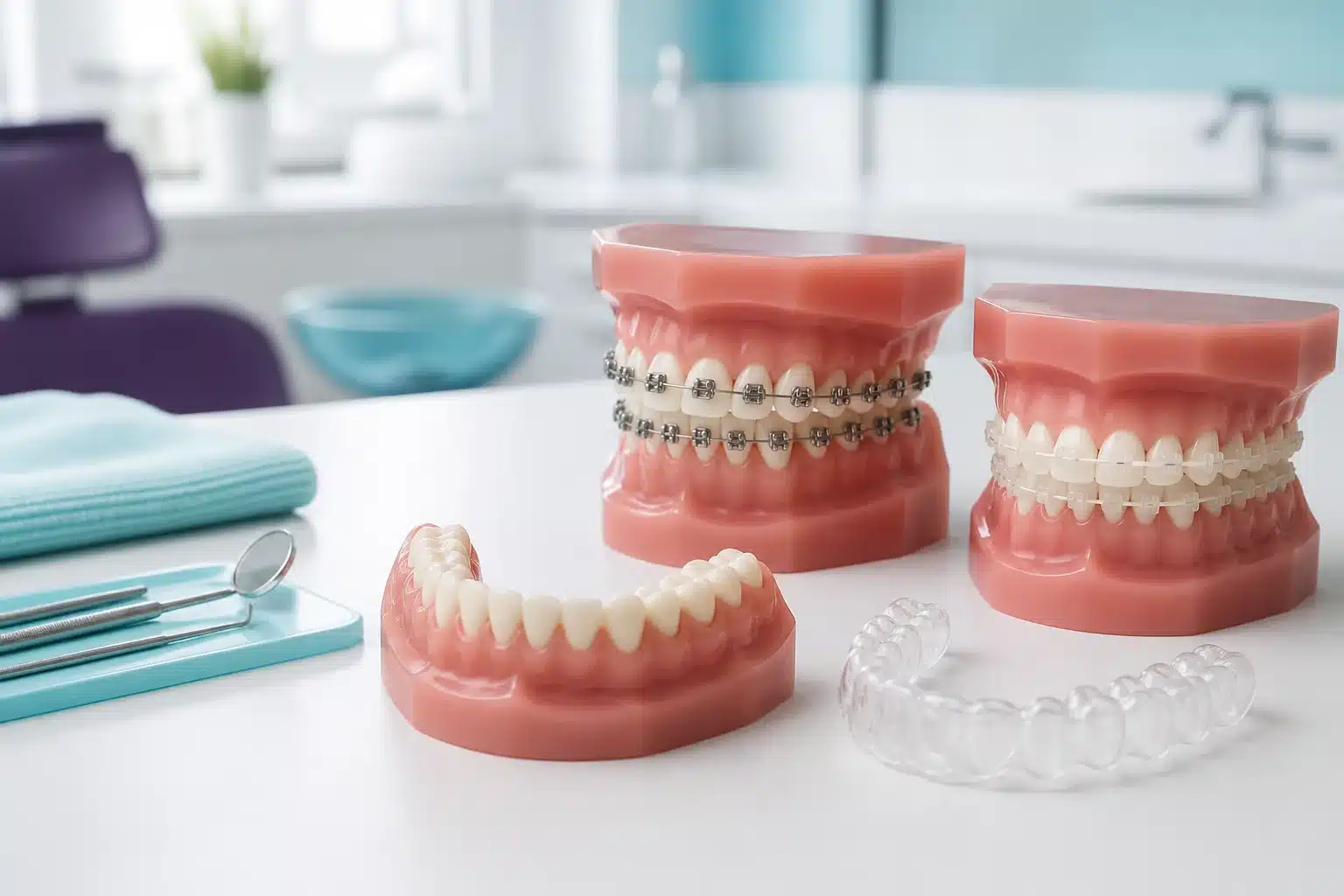
Comparing teeth braces types is easier when you look beyond appearance. The right appliance must be able to guide the required movements, fit your daily routine and support a stable, healthy bite. A specialist diagnosis comes before the choice.
The main types of braces include fixed metal, ceramic and lingual systems, while removable tooth aligners offer another route for suitable cases. Comparing the different types of braces, or types of dental braces, should begin with the movements your smile needs.
Teeth braces types at a glance
1. Traditional metal braces
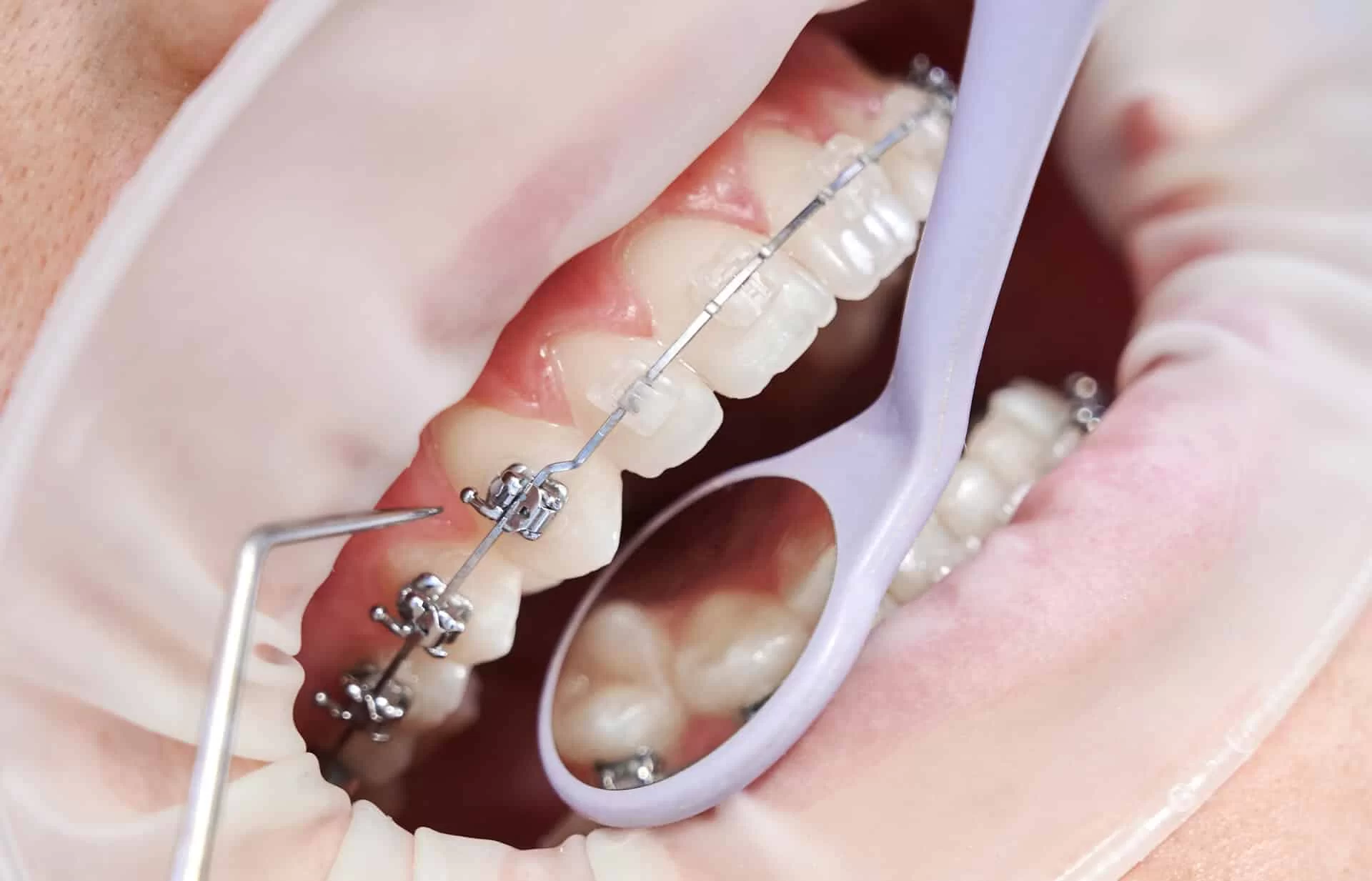
Metal brackets are bonded to the teeth and connected by an archwire. Small adjustments create controlled forces that guide teeth over time. Modern brackets are smaller than older designs, and metal braces can treat many types of crowding, spacing and bite discrepancy. Because they remain fixed, treatment does not depend on remembering to insert the appliance.
2. Ceramic braces
Ceramic braces work in a similar way but use clear or tooth-coloured brackets for a subtler look. They appeal to adults and image-conscious teens who need fixed-appliance control. Ceramic components can require careful cleaning, and they are not automatically suitable for every tooth or bite relationship. See Dr Sher’s page on clear braces.

3. Self-ligating braces
Self-ligating brackets use a built-in clip or door to hold the archwire rather than an elastic tie. They can be metal or ceramic. Marketing claims can make one system sound universally faster, but total treatment time still depends on diagnosis, biological response, appointment attendance and cooperation.
4. Lingual braces
Lingual braces sit on the back surface of the teeth, making them difficult to see from the front. Their position can affect speech and tongue comfort during adaptation, and cleaning requires care. They are a specialised option and may not be practical for every case.
5. Clear aligners
Clear aligners are removable trays that sequentially guide teeth. They can be taken out for meals and cleaning, but usually need to be worn for about 22 hours a day. They suit many patients, though some complex movements are treated more predictably with fixed appliances or a combined approach. Read the AAO’s balanced braces versus clear aligners comparison.
How an orthodontist helps you choose
- Complexity: Can the appliance achieve the required tooth and bite movements?
- Health: Are the teeth, roots, gums and supporting bone ready for treatment?
- Lifestyle: Is discretion, removability or low daily handling most important?
- Cooperation: Will aligner wear, elastics and cleaning instructions be followed?
- Value: What does the complete fee include through retention?
The American Association of Orthodontists describes metal, ceramic, self-ligating and lingual systems and reinforces that treatment should be tailored to the individual problem.
Frequently asked questions about teeth braces types
Which type works fastest? There is no guaranteed fastest appliance. Treatment time depends on the movements required, biology, missed appointments, breakages and cooperation.
Which option is least visible? Clear aligners and lingual braces are difficult to see, while ceramic braces are subtler than metal braces. Suitability still comes first.
Can I choose an appliance before an examination? You can discuss preferences, but a diagnosis is needed to confirm which options can deliver a safe, stable result.
Do all teeth braces types require retainers? Retention is normally required after braces or aligners because teeth can shift after active treatment.
Explore adult orthodontics, orthodontics for children and teens, and clear aligner treatment.
Teeth braces types: a practical comparison
Compare teeth braces types by treatment capability, visibility, cleaning needs and how much daily cooperation they require. The most suitable teeth braces types are the options that can deliver the planned tooth and bite movements safely, not simply the options that look most discreet.
Bring your aesthetic and lifestyle preferences to a specialist consultation, then compare the clinically suitable options.
Clinical note: This article is general education. Appliance selection requires an individual orthodontic diagnosis.

