
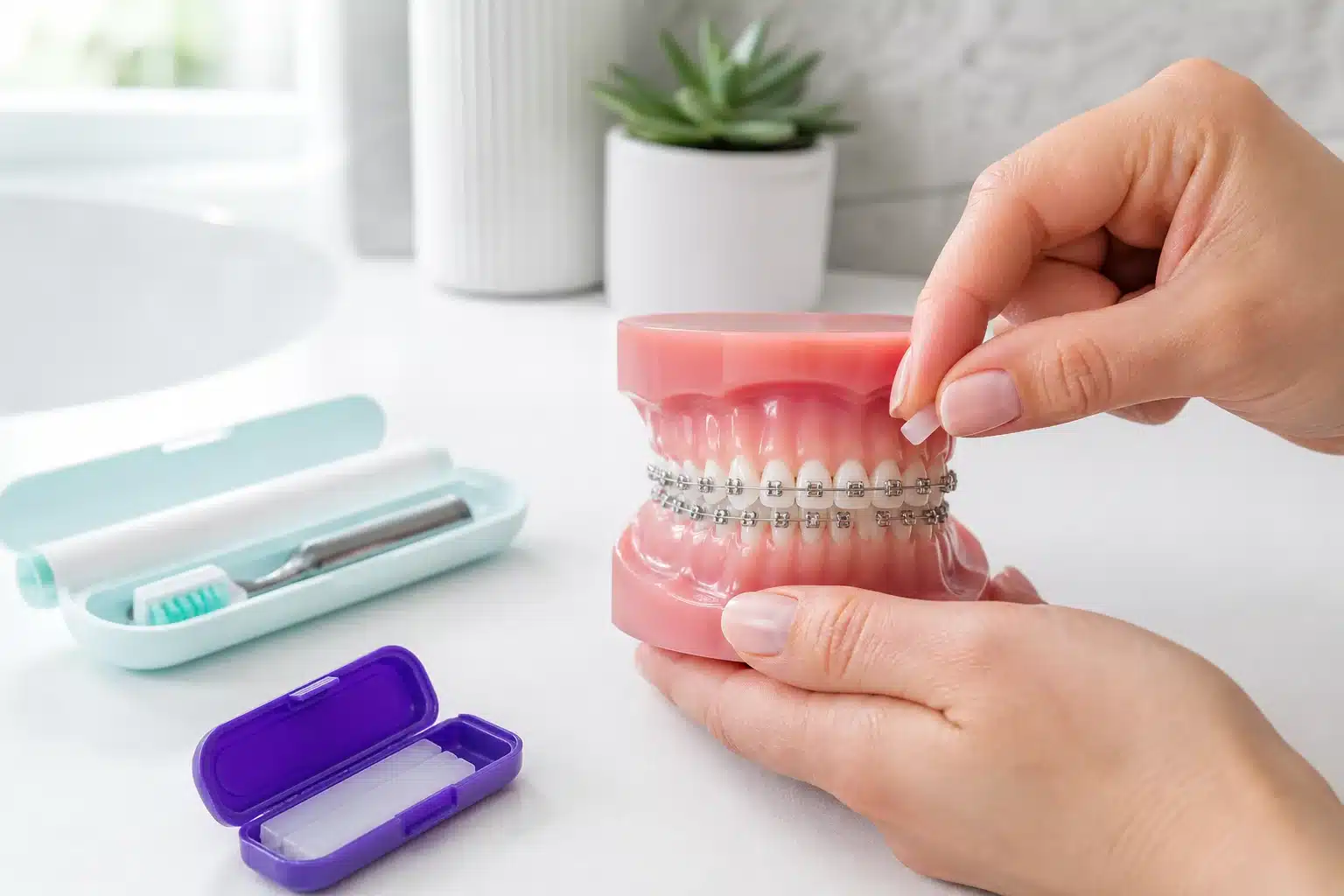
Orthodontic wax for braces is a simple temporary aid when a bracket or wire rubs the inside of your cheek or lip. It does not repair a broken appliance, but it can cover a rough point and reduce friction while your mouth adapts or while you wait for professional advice.
What is orthodontic wax for braces?
Orthodontic relief wax is a soft, mouldable material. Once pressed over the irritating part of a brace, it creates a smoother surface between the appliance and the soft tissues of the mouth. People also search for dental wax or teeth braces wax; these terms commonly describe the same practical patient-care product.
The American Association of Orthodontists recommends keeping orthodontic wax in a travel care kit and using it to cover sharp edges temporarily. Its between-visit care guide also advises reporting loose wires or brackets promptly.
How to apply orthodontic wax in 7 steps
- Wash and dry your hands. Clean hands reduce the chance of transferring debris to the mouth.
- Identify the exact spot. Use a mirror to find the bracket, hook or wire creating friction.
- Gently dry the area. Wax adheres better when the bracket is reasonably dry. Use clean tissue or gauze.
- Pinch off a small piece. A pea-sized amount is usually more than enough for one area.
- Warm and roll it. Roll the wax briefly between clean fingers to soften it into a small ball.
- Press it over the appliance. Flatten the wax so it fully covers the rough point and forms a smooth surface.
- Replace it as needed. Remove old wax before cleaning your teeth and apply a fresh piece if irritation continues.
When wax helps and when it does not
How long can orthodontic wax stay on?
Replace wax when it loosens, becomes dirty or after eating and brushing. It is designed as temporary protection. If you repeatedly need wax in the same place, let your orthodontist know; the appliance may need attention.
What else can ease normal braces discomfort?
Pressure or tenderness for a few days after braces are fitted or adjusted can be normal. Soft foods, cool drinks and a warm salt-water rinse may feel soothing. Use over-the-counter medicines only according to the product directions and advice from your healthcare professional. The AAO’s guide to managing orthodontic discomfort distinguishes expected soreness from a broken wire or bracket that needs attention.
Frequently asked questions
Can I sleep with orthodontic wax on my braces?
Wax is commonly used overnight, but it may loosen. Use a small, well-adhered piece and follow your orthodontist’s instructions.
What if I swallow a small piece?
Orthodontic wax is intended for use in the mouth and a tiny accidental amount is generally not a cause for alarm. Contact a healthcare professional if you have symptoms or concerns.
Why will the wax not stick?
The bracket may be too wet or the piece may be too large. Dry the area gently, warm a smaller piece and press it firmly over the entire rough point.
Can wax fix a broken wire?
No. It may protect your cheek temporarily, but a damaged appliance should be assessed by the practice.
For more daily-care guidance, read about common adult braces myths and compare braces with clear aligners.
Orthodontic wax for braces: key reminders
Use orthodontic wax for braces as a clean, temporary barrier over the rough point. Replace orthodontic wax for braces when it loosens or becomes dirty. Keep spare orthodontic wax for braces in your daily kit, and remember that orthodontic wax for braces cannot repair a loose bracket or displaced wire.
A wire or bracket still bothering you?
Use wax for temporary comfort, then contact the practice so the appliance can be checked.
Clinical note: This article provides general first-aid information and does not replace advice from your orthodontist or emergency care.

